
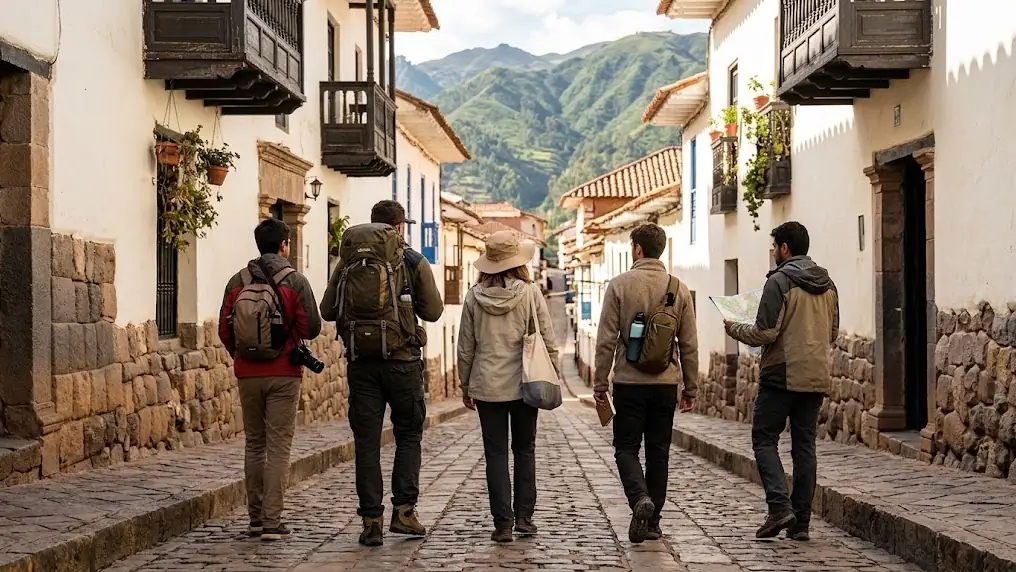
Your Cusco trip length by travel style is the quickest way to stop second-guessing the calendar. A traveler on a tight schedule and a hiker who wants Rainbow Mountain are not planning the same trip, even if both land in the same airport.
This list describes five common profiles and the number of days that fits each, using the 3, 5 and 7 day plans as the base. If your style sits between two of them, the notes under each type say what to add or cut.
How to match your style to a number of days
Start with two questions. Is Machu Picchu on the list? And how much of the trip do you want to spend walking uphill?
Cusco can easily take up an entire week, but it does not have to. Three days work when your schedule is very tight, five days give you room for Machu Picchu, and seven days make much more sense for hikers. Pick the number that fits how you travel in practice, including how often you need a rest day. The tricky part is not choosing enough places. It is placing them in the right order, and the right order depends on who is traveling.
Cusco trip length by travel style: five traveler types
1. The tight-schedule traveler: 3 days
You want the old city and the Sacred Valley and nothing that needs a long recovery. Spend one day in central Cusco, one in the valley with Pisac and Ollantaytambo, and one at Moray and Maras. Take a taxi uphill on the first day to save energy, and keep that day light so your body can adjust. The full Cusco Tourist Ticket is S/130 for foreign visitors and lasts ten days.
2. The first-time Machu Picchu visitor: 5 days
Five days let you fit the citadel without squeezing every afternoon. Put it on the third day, after the city and the Sacred Valley, and book the entry first because Peru limits daily visitor numbers at the site. Check which circuit your ticket includes before buying train tickets. On the fourth day, return to Cusco and slow things down with Sacsayhuamán or San Blas, because a good itinerary needs recovery time.
3. The relaxed valley lover: 5 days
If the plan is slow mornings and long lunches, use Ollantaytambo as a base. Staying there overnight can save travel time and is useful for train connections, and it deserves more attention than a quick stop at the archaeological site. Ollantaytambo has huge terraces and original Inca streets, and Pisac adds hillside ruins and wide valley views.
4. The hiker: 7 days
Seven days is the best choice for active travelers. Humantay Lake sits around 4,200 meters and comes on day five, and Rainbow Mountain, at roughly 5,200 meters, is the finale on day seven, so your body has had time to adjust. Walk at your own pace on the steeper sections of Humantay and do not race other hikers.
5. The recovery-minded traveler: 7 days
For people who prefer to alternate big outings with easy days, the seven day plan has a built-in light day for museums, San Blas or a food tour. Another option is simply enjoying a longer lunch near the main plaza before the mountain trips, or walking San Blas without a plan. This profile loses nothing by being slow, because the outings that need the most energy come later. Saving energy before Rainbow Mountain is sensible.
What to check before you decide
Whatever the profile, altitude sets the pace. Cusco sits around 3,350 meters above sea level, and the CDC advises mild exercise only and no alcohol for the first 48 hours. If you want to compare the three plans day by day, this Cusco duration guide is the place to start.
When you book tours, ask what the price includes, how many travelers join each departure and what time the pickup begins. For 2026, the Ministry of Culture set a Machu Picchu capacity of 5,600 on selected high-season dates and 4,500 on the other days. Also ask whether emergency oxygen is available on mountain trips and what happens when weather changes the itinerary. Cusco rewards schedules with space in them, so leave time between the bigger outings.