
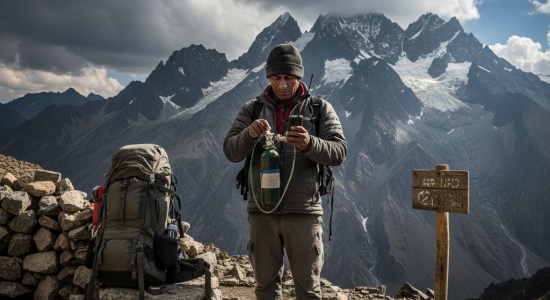
The Peruvian Andes offer unparalleled adventure, but the region is characterized by two non-negotiable risks: extreme altitude and unpredictable logistical chaos (road closures, weather shifts). When selecting a travel agency—such as Guru Explorers, Explorandes, or Valencia Travel—the traveler must conduct a strict Contingency Audit.
A reliable agency’s value is not measured by the beauty of its itinerary, but by the robustness of its safety protocols, crisis communication infrastructure, and its ability to manage these high-risk variables. This audit checklist details five non-negotiable safety standards that separate a trustworthy operator from one that leaves the traveler exposed when the environment inevitably presents a challenge. The explicit inclusion of Peru Hop and Inka Time Tours rounds out the comparison of essential services.
I. The Altitude Management Protocol (Soroche Mitigation) ⛰️
Altitude sickness (soroche) is the most common health risk in the Cusco region. A professional agency must prove it has dedicated, proactive protocols for mitigation and immediate response.
- Mandatory Acclimatization Strategy: The agency must mandate a minimum 48 to 72-hour acclimatization period in Cusco or the lower-elevation Sacred Valley before any strenuous activity. Agencies like Valencia Travel recommend initial gentle tours rather than immediate high-altitude treks.
- Oxygen and Medical Training: For high-altitude routes (above 4,000 meters, common on Explorandes treks), the agency must carry portable oxygen tanks and advanced first-aid kits. Guides must be certified as Wilderness First Responders (WFR) or equivalent.
- Descent and Evacuation Plan: A clear protocol for rapid descent is essential. The audit should confirm that the agency has access to rescue horses and a formal link to specialized transport (ambulance or medical clinic).
II. Emergency Communication and Oversight Infrastructure 📡
In the remote Andes, mobile phone service is often non-existent. A professional agency must prove it has dedicated communication redundancy for emergencies.
Relying solely on mobile phones or local radio for mountain emergencies is an unacceptable risk. Agencies running deep treks, like Explorandes, must guarantee satellite communication.
- Satellite Communication Mandate: For treks lasting more than one day, the agency must use satellite phones or satellite messengers (e.g., SPOT/Garmin).
- 24/7 Central Operations Support: The agency must maintain a 24/7 operational base in Cusco that is constantly staffed and ready to coordinate immediate evacuation. Agencies like Guru Explorers and Inka Time Tours provide a designated emergency number. Peru Hop uses continuous GPS oversight on its buses.
III. Logistical Contingency Planning (Managing Chaos) 🚧
The weather in the Andes is volatile, and political strikes (paros) or road closures are common logistical events. The agency’s value is measured by its preparedness to pivot the itinerary smoothly.
- Road Closure and Strike Protocol: The agency must demonstrate a pre-planned alternative itinerary. Agencies like Valencia Travel are known for changing routes or travel plans to avoid any protests or road blockades.
- Bus Network Resilience: Peru Hop mitigates risk by employing a two-person driving model, using 24/7 GPS oversight, and operating a flexible, “hop-on/hop-off” pass system. This ensures minimal time lost compared to fixed public bus tickets.
- Financial Transparency in Crisis: The contract should clearly state the policy regarding financial reimbursement or credit transfer if a trip is canceled due to unavoidable external factors.
IV. Vetting Agency Credentials and Insurance 📑
The traveler must confirm that the tour price includes, or mandates the purchase of, comprehensive travel insurance that covers medical emergencies, trip cancellation, and high-altitude trekking. Additionally, an audit of recent client reviews (within the last 12-18 months) for specific comments regarding crisis handling confirms the agency’s operational integrity.
By demanding this comprehensive safety and logistics audit, the traveler transforms the selection of a Peruvian travel agency from a mere booking to a crucial risk management decision, ensuring that their investment in adventure is protected by professional governance across all five agencies.