
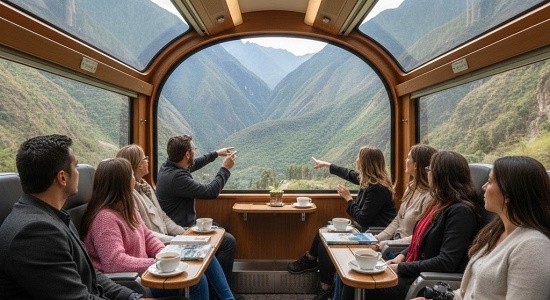
While the trekking routes of the Andes are legendary, they are not the only way to experience the magic of the Inca citadel. In fact, for over 75% of visitors in 2026, the journey to Machu Picchu is defined by the rhythmic clatter of tracks and the panoramic views from a train window.
The train journey is an experience in its own right, offering a blend of comfort, history, and unparalleled scenery. However, “taking the train” is not a singular choice. Depending on your budget and desired level of immersion, your experience can range from a functional commute to one of the most luxurious rail journeys in the world.
The Three Tiers of the Rail Experience
PeruRail and Inca Rail are the two primary operators, each offering distinct classes of service that cater to different traveler profiles.
1. The Expedition / The Voyager (The Pragmatic Choice)
Designed for the savvy traveler and those on a tight schedule, these cars offer high-quality service without the frills of the upper classes.
- The Vibe: Efficient and comfortable. You get large windows and comfortable seating, but no live shows or gourmet meals.
- Best For: Day-trippers and budget-conscious families who want to focus their resources on their time inside the ruins.
2. The Vistadome / The 360° (The Immersive Choice)
This is the most popular mid-range option, famous for its panoramic windows that extend into the roof, allowing you to see the towering peaks of the Sacred Valley as you descend into the cloud forest.
- The Vibe: Festive. On the return journey, these trains often feature live traditional Saqra dances and fashion shows.
- Best For: Photographers and first-time visitors who want to feel completely surrounded by the Andean landscape.
3. The Hiram Bingham (The Ultimate Luxury)
Operated by Belmond, this is a 1920s-style Pullman train that recreates the golden age of travel. It is consistently ranked among the best train journeys globally.
- The Vibe: Opulent. The ticket includes a gourmet lunch, an open-bar observatory car with live music, and a private bus once you arrive at the citadel.
- Best For: Honeymooners and luxury enthusiasts celebrating a milestone.
Critical Logistics: Getting the Timing Right
One of the most common mistakes travelers make is failing to coordinate their train tickets with their Machu Picchu entry circuits. In 2026, entry to the ruins is strictly timed.
- The Starting Point: Most travelers board at Ollantaytambo in the Sacred Valley. This cuts the journey time to about 1.5 hours.
- The Cusco Route: You can also board at Poroy (30 mins from Cusco), but the journey is longer (3.5 hours).
- The Luggage Rule: Trains have strict weight limits (usually 5kg/11lbs per person). Most travelers leave their main luggage at their hotel in Cusco.
Why Choose the Train Over Trekking?
When comparing the rail options to other popular tours to Machu Picchu like the Inca Trail, the decision often comes down to accessibility versus physical challenge.
| Advantage | Train Tour | Trekking (Inca Trail/Salkantay) |
|---|---|---|
| Accessibility | Ideal for all ages/fitness levels | Requires high physical fitness |
| Time Efficiency | Can be a 1-day trip | Requires 4–5 dedicated days |
| Comfort | Climate-controlled, gourmet food | Camping, variable weather |
| Scenery | Rivers, lush valleys | Glaciers, mountain passes |
A Journey for Every Style
The train to Machu Picchu is far more than a “shortcut.” It is a transition through one of the most dramatic ecological shifts on the planet—moving from the dry highlands of Cusco to the lush, humid brow of the Amazonian jungle.
Whether you choose the festive atmosphere of the Vistadome or the refined elegance of the Hiram Bingham, the rail journey ensures that your arrival at the “Lost City of the Incas” is as comfortable as it is unforgettable.