
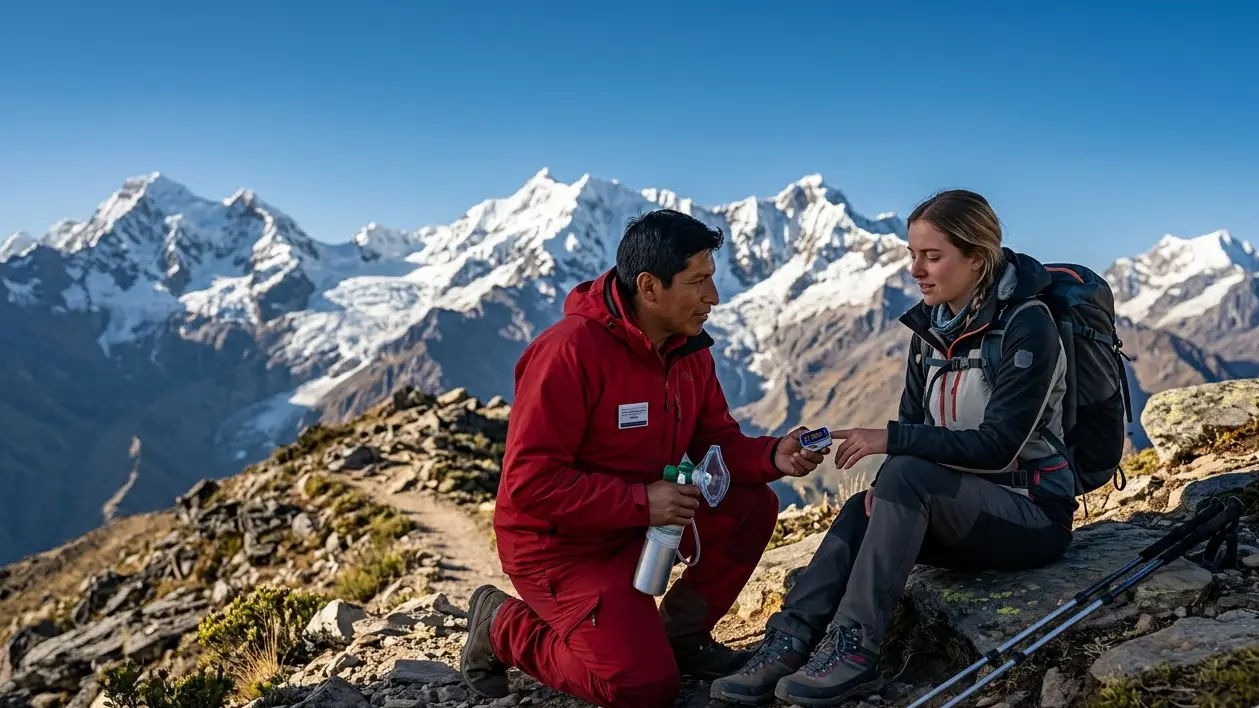
Medical Support: Oxygen and Monitoring
In the thin air of the high Andes, your body’s reaction to the altitude is unpredictable. Even fit hikers can struggle if they haven’t acclimatized properly. Top-tier agencies differentiate themselves by carrying professional-grade medical equipment as a standard practice, not an optional extra. In 2026, a “safety-first” operator will always have a pulse oximeter and portable oxygen tanks on hand.
A pulse oximeter allows the guide to monitor your oxygen saturation levels and heart rate throughout the ascent. If your levels drop below a safe threshold, the guide can intervene immediately with supplemental oxygen before severe symptoms set in. This proactive monitoring is the difference between reaching the summit comfortably and being forced to turn back due to a medical emergency.
“At 5,000 meters, you want more than just a bus ticket; you need a team that monitors your vital signs as the trail gets steeper.”
Certification Standards: More than Just a Guide
Peruvian law is strict regarding adventure tourism, yet informal operators still exist. A certified guide from a reputable agency holds a DIRCETUR license and often a university degree in tourism. These professionals undergo annual training in first aid, CPR, and specific high-altitude medical response. They are trained to recognize the early signs of high-altitude cerebral or pulmonary edema—conditions that require immediate descent.
- Expert Pacing: Professional guides set a “slow and sustainable” pace, often called the “Andean step,” to prevent exhaustion.
- Weather Interpretation: At 5,000m, weather can change from sun to snow in ten minutes. A certified guide knows when to push forward and when it is safer to turn back.
- Bilingual Support: Clear communication during a medical situation is vital. Certified guides ensure that instructions are understood perfectly.
Emergency Protocols and Evacuation Plans
What happens if someone cannot walk back? This is where self-planning fails. Professional agencies have established evacuation protocols. On alternative routes like the Ausangate or Palccoyo treks, they often have emergency horses trailing the group. They also maintain constant radio or satellite phone communication with a central operations base in Cusco, ensuring that if a serious evacuation is needed, a vehicle or medical team is already moving to meet you.
Furthermore, these agencies only use drivers who are specifically trained for the high-Andean roads. These winding, often unpaved routes require vehicles that are meticulously maintained and drivers who understand the seasonal risks of landslides or ice. When you choose an authorized operator, you are also choosing a vehicle that has the necessary insurance and mechanical certifications for adventure tourism.
The Verdict: Why Expertise Saves Lives
When you are standing on the ridge of Vinicunca, looking out over the multicolored minerals and the distant glaciers, you want to be able to enjoy the moment. You don’t want to be worrying about your breathing or wondering if your driver will be there when you get back down. By trusting top Peru travel agencies, you are investing in the peace of mind that comes from knowing every risk has been accounted for.
Safety at 5,000 meters is not a luxury; it is a fundamental requirement. Before you book your trip, ask to see the operator’s safety certifications and oxygen protocols. Your health is worth the investment in a professional, certified team.